
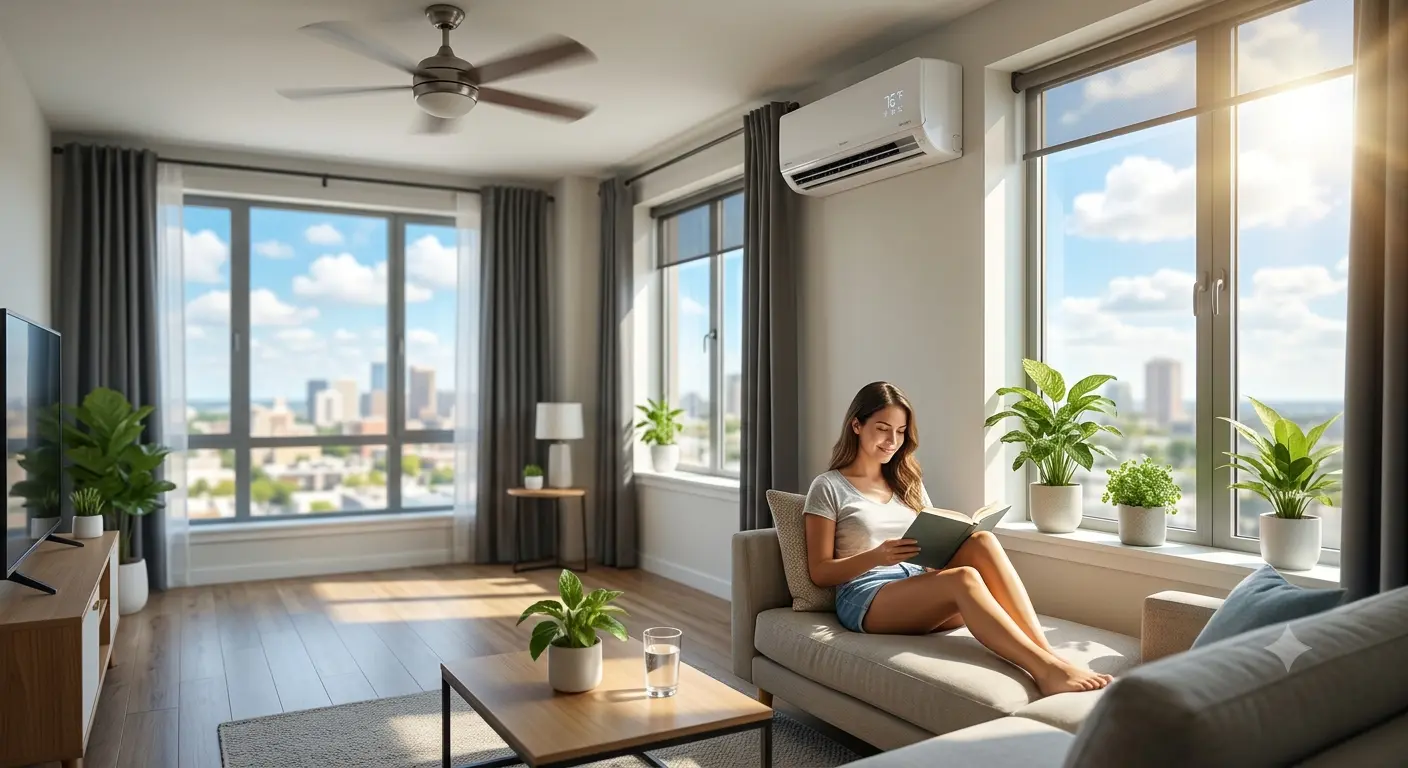

As everyone knows, summers are going on in almost every country and this summer the heat is so much that in some countries in Europe, where there was no need for ACs, people are busy buying them. But one more thing that is worth noticing is our electricity bill. Nowadays in this heat, people use ACs and fans etc. more, due to which a lot of electricity is used and this directly affects our pockets. So, here I am going to suggest some tips as per my personal experience, by using which I have reduced my electricity bill. So let’s start “How to lower electric bill in apartment during summer“.
If you didn’t see the your July electric bill, your July electric bill just showed up, and it’s not a bill so much as a hostage note.
We can all breathe a sigh of relief that summer’s only halfway over. Phew.
And then we can all immediately go fetal with the fear of what August’s bill is going to unleash on our checking accounts, because if you think your air conditioner running eighteen hours a day is “keeping you cool,” what it’s actually doing is quietly financing your utility company’s next yacht.
I know what you’re gonna ask. Is it reaaaaally your AC doing this? Well, I’ve spent a chunk of my career staring at load calculations and utility spreadsheets for a living, so I’ll nutshell it for you, semi-satirically, which is honestly the only way I know how to explain a watt to a normal human being:
Your air conditioner is, by a mile, the single biggest energy hog in your apartment during summer. It’s not your phone charger. It’s not your TV standing by in the corner judging you. It’s the compressor kicking on every time your apartment creeps above whatever temperature you set, and in a lot of older apartment buildings, that compressor is working against walls with the insulating properties of a paper bag.
So no, you don’t need to live like a caveman with the lights off and a hand fan. You just need to stop letting your apartment fight itself. Here’s how.
Set Your Thermostat Like You Mean It, Not Like You’re Punishing Yourself
The Department of Energy recommends 78°F (26°C) when you’re home and awake, and higher when you’re out. Every degree you drop below that can add roughly 3–5% to your cooling costs. Set it to 68°F because “it feels better,” and you’re not cooling your apartment faster, you’re just paying your compressor to run nonstop until it hits a number it may genuinely never reach, especially in older buildings with leaky windows.
If your unit has a “smart” or programmable feature, or you can install a smart thermostat even in a rental (check with your landlord first, some allow it, some very much do not), use it. Program it to ease up while you’re at work and get back to comfortable about 30 minutes before you’re home. Your AC doesn’t need to babysit an empty apartment.
Ceiling Fans and Box Fans Are Doing More Work Than You’re Giving Them Credit For
Here’s the part nobody explains well: a fan doesn’t cool a room, it cools you. It moves air across your skin so sweat evaporates faster, which makes you feel a few degrees cooler even though the thermostat hasn’t budged. That means you can bump your AC up 4 degrees, run a fan, and feel just as comfortable while your compressor works noticeably less.
The catch, and this is the one people skip: turn the fan off when you leave the room. A fan cooling an empty room is just an appliance burning electricity to make furniture comfortable.
Block the Sun Before It Gets Inside, Not After
Direct sunlight through a window can raise the temperature of a room significantly faster than your AC can undo it. Blackout curtains, cellular shades, or even cheap reflective window film can cut a meaningful chunk of that solar heat gain before it ever becomes your AC’s problem. South and west-facing windows are the worst offenders in the afternoon, so start there if you’re not doing your whole apartment.
I’ve genuinely watched a west-facing living room drop several degrees just from closing curtains during peak afternoon sun. It’s not a placebo. Sunlight through glass is basically a free space heater you didn’t ask for.
Stop Letting Your Kitchen Fight Your AC
Your oven, stovetop, and even your dishwasher’s heated dry cycle all dump heat into your apartment, which your AC then has to work overtime to remove. During a heatwave, that’s a losing trade. Lean on the microwave, air fryer, slow cooker, or the grill if you’ve got a balcony, and save oven-heavy cooking for cooler evenings. Same logic applies to running the dishwasher or laundry, do it at night when the heat won’t stack on top of the day’s peak temperature, and you’ll often catch cheaper off-peak electricity rates too if your utility offers time-of-use pricing.
Check Your AC Filter Before You Blame the Landlord’s Ancient Unit
A clogged air filter is one of the most common, most ignored reasons window units and central air both underperform in summer. Dust and debris choke airflow, which forces the unit to run longer and harder to hit the same temperature. Most window unit filters just slide out and rinse under a sink. Do it monthly during peak summer use. It takes five minutes and it’s the closest thing to a free upgrade your AC will ever get.
Unplug the Vampires
No, not that kind. “Vampire load” is the electricity your electronics quietly drink while turned off but still plugged in, chargers, game consoles, coffee makers with a clock display, cable boxes. Individually tiny, collectively real, especially across a whole apartment full of them. A power strip you can flip off for your entertainment setup when you’re not using it is a legitimately underrated move.
Swap Bulbs If You Haven’t Already
Incandescent bulbs waste most of their energy as heat, not light, which means they’re quietly warming your apartment while your AC tries to cool it. LED bulbs use up to 75% less energy and run cool to the touch. If you’re still running old incandescents in 2026, this is the easiest, cheapest fix on this entire list, and it pays for itself fast.
You’re not going to out-thrift a heatwave with willpower alone. Your apartment is going to get hot, your AC is going to run, and your bill is going to reflect that. But most of what makes a summer electric bill balloon isn’t the AC existing, it’s the AC fighting sunlight, heat-generating appliances, clogged filters, and a thermostat set like you’re trying to win an argument with July. Fix those, and you’re not sitting in the dark being a martyr about it. You’re just not paying your utility company extra to fight a battle you could’ve avoided in the first place.