

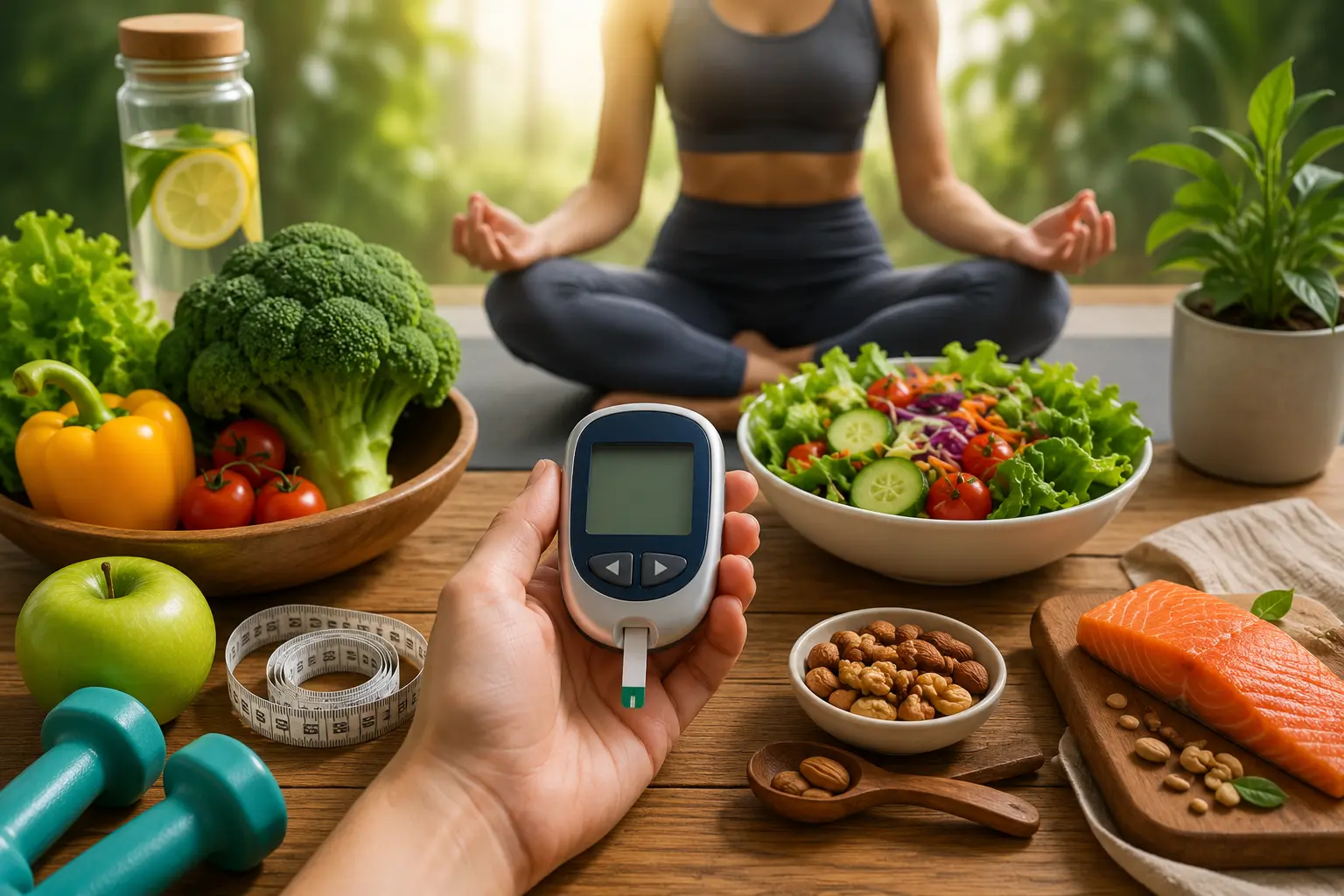

Today I have come to talk about a topic which is becoming a matter of concern for every person, city, state and country – “Blood Sugar”. On hearing the name of Blood Sugar, one gets scared because if your Blood Sugar is high then the problems caused by it create a lot of trouble for daily routine. Before talking about this, I want to tell you one thing that I am not a doctor or a specialist, I am just giving this information as per my personal experience and the feedback of people around me and some of my research experiences. So if I have missed something, please ignore it and correct me in the comments so that I can edit it. Today I am going to give some tips or suggestions on How to Manage Blood Sugar Levels Naturally this is totally based on my experience and research.
I remember sitting at my kitchen table with a glucose monitor I’d borrowed from my mum, poking my own finger for the first time out of pure curiosity. It was after a lunch that felt completely ordinary – white rice, a bit of chicken, a can of soda because it was hot out. Forty minutes later I felt jittery, foggy, almost hungover. The number on the little screen explained why. I wasn’t diabetic. I wasn’t even pre-diabetic. But that one spike, and the crash that followed it about ninety minutes later, was the moment I actually started paying attention to what “blood sugar” meant outside of a doctor’s chart. I’d spent years writing about nutrition by then, but there’s a difference between knowing something and feeling it happen in your own body.
That’s really what got me into this topic properly. Not a diagnosis, not a scare, just a quiet realisation that most of us are riding a glucose rollercoaster every single day and calling it normal life.
So let’s talk about it properly – what blood sugar actually is, why it swings the way it does, and the natural, everyday habits that genuinely help keep it steady. No extreme diets, no miracle powders. Just the stuff that actually works, explained simply enough that it makes sense wherever in the world you’re reading this from.
What “Blood Sugar” Actually Means
Every time you eat carbohydrates, your body breaks them down into glucose, which enters your bloodstream. Your pancreas responds by releasing insulin, a hormone that acts like a key, letting glucose move out of the blood and into your cells to be used as energy. In a healthy system, this is a smooth, almost invisible process. Fasting blood sugar typically sits somewhere around 70–100 mg/dL (roughly 3.9–5.6 mmol/L), and it rises and falls gently through the day.
The trouble starts when that rise happens too fast and too high, over and over again. Repeated spikes force your pancreas to work overtime, and over months and years, your cells can start ignoring insulin’s knock at the door – a condition called insulin resistance, which is the road that leads towards type 2 diabetes for a lot of people. The good news, and I say this as someone who’s read more research papers on this than I’d like to admit, is that this process is remarkably responsive to lifestyle. Small daily habits genuinely move the needle.
Start With What’s on Your Plate
I used to think “eating for blood sugar” meant cutting out carbs entirely. It doesn’t, and honestly, that approach rarely lasts. What actually helps is choosing the right kind of carbs and eating them in the right company.
Foods with a low glycemic index – lentils, beans, oats, most vegetables, whole grains – release glucose into your bloodstream slowly instead of all at once. Compare a bowl of white rice on its own to that same rice eaten with vegetables, a source of protein, and a little healthy fat, and the second version causes a noticeably gentler rise in blood sugar. It’s not about the ingredient, it’s about the combination and the order. Funnily enough, some research even suggests eating your vegetables and protein before the starchy part of your meal can blunt the spike that follows.
Fibre deserves a special mention here. It comes in two forms – soluble, which forms a gel-like substance in your gut and slows digestion, and insoluble, which helps keep your digestive system moving and supports insulin sensitivity over time. Chia seeds, flaxseed, oats, beans, and leafy greens are easy, inexpensive ways to get more of both into your day, wherever you live and whatever your local diet looks like.
Move Your Body, Even a Little
You don’t need a gym membership for this one. Muscles are basically glucose sponges – when they contract, they pull sugar out of your bloodstream to use as fuel, and this happens whether you’re lifting weights or just going for a brisk walk after dinner. A fifteen to twenty minute walk after a meal is one of the simplest, most evidence-backed habits for keeping post-meal blood sugar in check.
If you’re stuck at a desk most of the day, there’s a small trick worth knowing: repeatedly raising your heels while seated, sometimes called a soleus push-up, has been shown in research to noticeably lower blood sugar, especially after eating. It sounds too simple to work, but the muscle involved is unusually efficient at using glucose for a long time without tiring.
Beyond walking, a mix of aerobic activity and some strength training across the week improves how sensitive your cells are to insulin generally, not just in the hours right after you exercise.
The Habits Nobody Talks About Enough
This is the part I wish someone had told me earlier, because it’s not about food at all.
Sleep. A single night of poor sleep can measurably reduce insulin sensitivity the next day. Your body, running on too little rest, starts behaving a bit like it’s insulin resistant even in otherwise healthy people. Seven to nine hours isn’t a luxury here, it’s part of the actual mechanism.
Stress. When you’re stressed, your body releases cortisol, which signals your liver to release more glucose into your blood, on the assumption that you’re about to need the energy to run from something. Most of us aren’t running from anything, we’re just staring at a screen, so that glucose has nowhere useful to go. Practices like meditation, slow breathing, yoga, or even just stepping outside for ten minutes have shown up again and again in research as genuinely helpful for lowering that stress-driven glucose response.
Hydration. This one’s underrated. When you’re dehydrated, your blood sugar becomes more concentrated, and your kidneys have a harder time flushing out any excess through urine. Plain water, herbal teas, nothing fancy required.
A Small Habit I Picked Up Along the Way
One thing that’s become part of my own routine, purely from following the research rather than any personal drama around it, is a small amount of diluted apple cider vinegar before carb-heavy meals. A few studies have found that one to two tablespoons, mixed into water, can meaningfully lower the blood sugar spike that follows a meal, likely by improving insulin sensitivity and slowing digestion slightly. It’s not dramatic. It’s not a cure for anything. It’s just one small lever among many, and I mention it because it’s a good example of the kind of habit this whole topic is really about – not one big fix, but a handful of small, boring, repeatable ones.
Where This Actually Leaves You
None of this replaces medical care. If you have diabetes, pre-diabetes, or any concerns about your glucose levels, please talk to a doctor before changing anything significant, and keep monitoring as they advise. What natural habits can do is support that picture, sometimes reduce how much medication is needed, and in a lot of cases, prevent the whole thing from developing in the first place.
I still keep that borrowed glucose monitor in a drawer, mostly out of habit now rather than necessity. I don’t check it often. But every time I do, after a walk, after a proper meal, after a decent night’s sleep, the number is steadier than it used to be. Not perfect. Just steadier. And honestly, for something as unglamorous as a number on a screen, that’s turned out to be one of the more satisfying changes I’ve made.