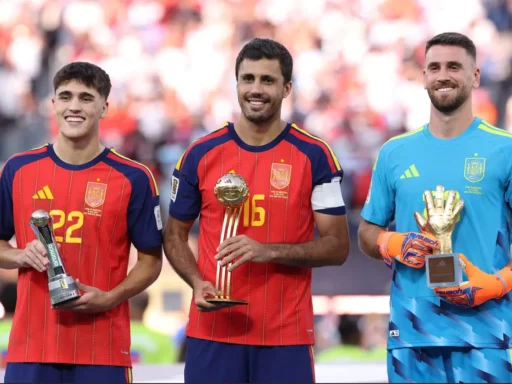
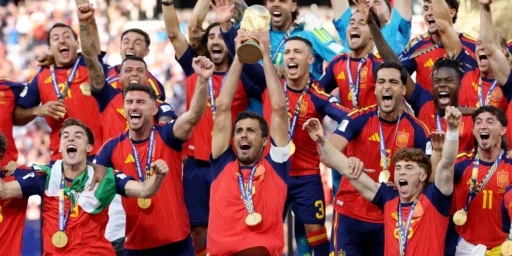
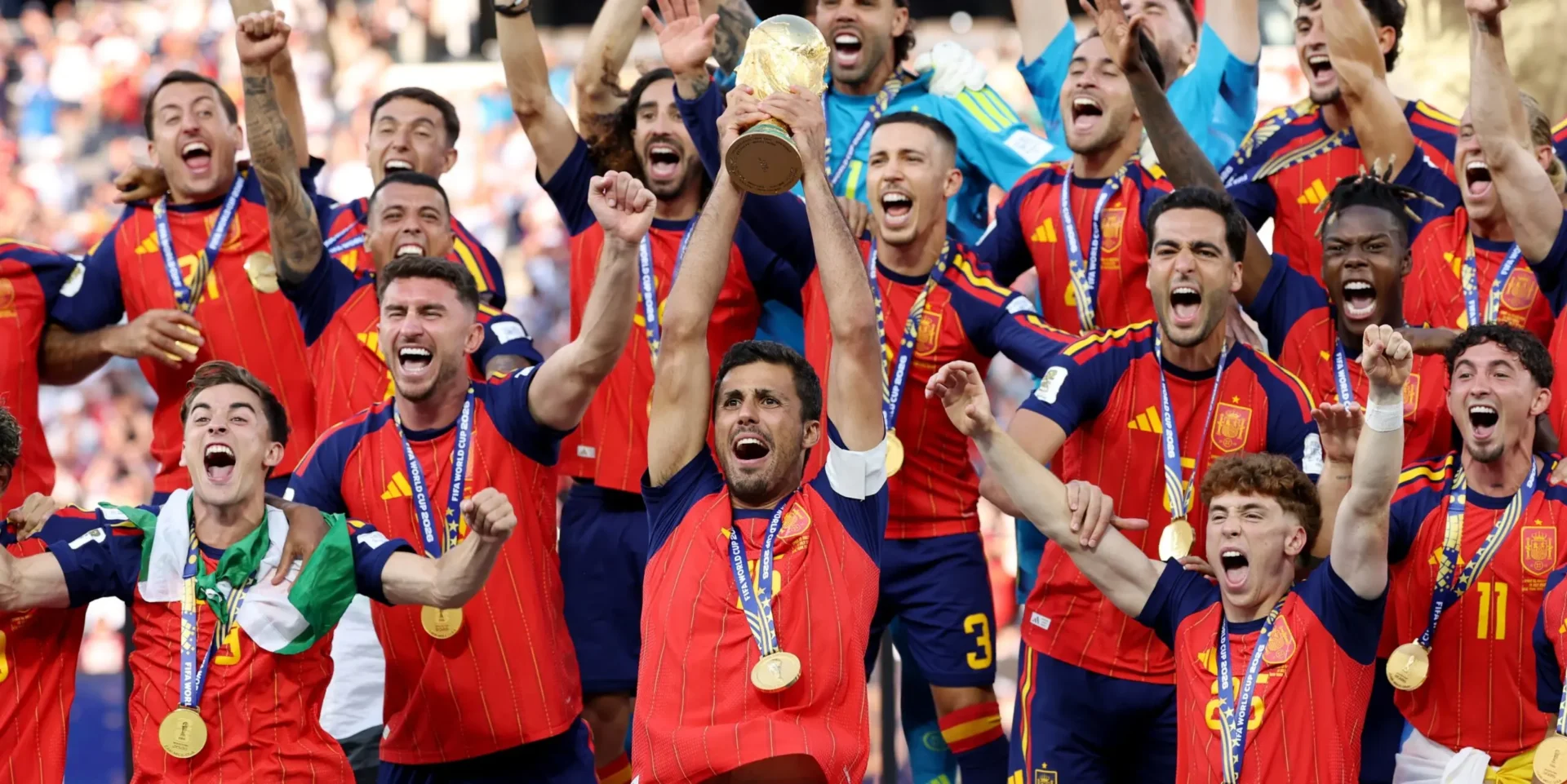

FIFA World Cup 2026 Winner: After 38 days, 48 teams and 104 matches, last night we got our new world cup winning team the unbeaten Spain. This match was also like other final matches.
In 2010, I watched Andrés Iniesta’s extra-time winner against the Netherlands on a projector screen in a friend’s garage, sitting on a folding chair that kept trying to fold itself back up underneath me. I remember almost nothing about the buildup. I remember everything about the ninety seconds after the ball went in — the garage door rattling, somebody’s little brother crying for no reason anyone could explain, a can of something warm and orange getting knocked over and nobody caring.
Sixteen years later, I watched Ferran Torres do it again, and I was older, and the couch didn’t fold underneath me, and I still didn’t remember the buildup.
That’s the thing about covering a World Cup final. You spend two hours waiting for a game to become a story, and then it becomes one in about four seconds, and you spend the rest of the night trying to explain those four seconds to people who weren’t paying close enough attention.
The Match Nobody Could Break Open
Spain went into Sunday’s final at MetLife Stadium in East Rutherford, New Jersey, having played the entire tournament unbeaten, which is a tidy way of saying they’d been the best team in the world for about a month and were daring anyone to prove otherwise. Argentina, defending champions, chasing what would have been the first back-to-back title since Brazil in 1962, were the last team standing between Spain and a second star.
For ninety regulation minutes, Argentina did the one thing nobody expected them to be good at: standing still and absorbing punishment. Spain had the ball. Spain had 68 percent of it, if you’re the kind of person who needs a number to believe something you already watched happen. Spain had corner after corner, chance after chance, Lamine Yamal running at defenders like he’d personally scheduled an appointment to embarrass them. And Emiliano Martínez, Argentina’s goalkeeper, kept saying no.
He said no eleven times, which is a World Cup final record, and I want to sit with that for a second, because eleven saves in a final is not a goalkeeper having a good day. It’s a goalkeeper single-handedly rewriting the ending of a movie he’s not supposed to be the main character of.
Somewhere in the second half, Enzo Fernández picked up a second yellow card for a foul on Pau Cubarsí, and Argentina played the rest of the match — extra time included — with ten men and a shrinking amount of hope. And still the goal wouldn’t come. I’ve covered enough finals to know that “still the goal wouldn’t come” is usually the sentence right before something changes everything.
The 106th Minute
It changed in the second half of extra time, thirty-nine seconds in, which is the kind of detail that sounds made up until you watch it happen and realize soccer occasionally has a sense of theater that even fiction writers would consider excessive. Nico Williams found space on the left, cut the ball back, and substitute Ferran Torres — on for Mikel Oyarzabal since the 62nd minute, mostly unnoticed until this exact moment — hammered it home from close range.
Torres had come off the bench to be the answer to a question Spain had been asking all night. Afterward he said the goal belonged to forty-seven million people, not just to him or his teammates, which is the kind of thing athletes say that sounds like a cliché until you remember he’s talking about an entire country that stayed up past midnight to watch.
Spain held on. Argentina pushed, because that’s what Argentina does, but ten men chasing a game against a team that had dominated every minute of it was never going to be enough. When the final whistle went, Spain had their second World Cup, sixteen years after their first, and their manager Luis de la Fuente had done something that will get his name mentioned in the same breath as Vicente del Bosque for a long time.
Messi, One More Time
I want to talk about Lionel Messi for a moment, because I think it matters, and because I suspect this is the last time I’ll get to write his name in a World Cup story. At thirty-nine, he became the oldest outfield player ever to start a final, and the first man to start three of them. He barely touched the ball on Sunday — Argentina managed two shots all game, neither on target — and when it ended, he stood on the field and cried while he stared into the stands at his own supporters.
“They were better, to be honest,” he said afterward. Four words. No excuses in them anywhere.
That’s not a small thing for a man who has spent two decades being the exception to every rule about what’s possible on a soccer field. He finished the tournament with eight goals, two behind Kylian Mbappé for the Golden Boot, and he still hasn’t confirmed whether this really was the end. But watching him on that field, I think we all knew what we were watching, even if nobody wanted to say it out loud yet.
What Spain Actually Did
It’s easy to talk about Spain’s 2026 title as a poetic bookend to 2010, and it is that. But I don’t want to undersell how thoroughly they earned it. This wasn’t a team that snuck through on penalties or rode a hot goalkeeper. They finished the final with 20 shots to Argentina’s two, an expected-goals total near 2.0 against Argentina’s 0.2, and they did all of that against a defending champion with Messi in the lineup. They started the tournament with a draw against debutants Cape Verde and somehow that ended up being the least impressive thing they did all summer.
There’s a version of this story that’s just a scoreline: Spain 1, Argentina 0. But I was watching, and I can tell you it took a hundred and six minutes and one very patient substitute to get there, and I don’t think anyone in that stadium — Spanish, Argentine, or just there for the free t-shirt cannon — will forget the thirty-nine seconds it took Ferran Torres to end it.