


How to Fix Your Sleep Schedule When You Work Night Shifts This is a question many people ask and discuss with their friends, as our lives have become so busy these days. I remember as a child, my dad would leave for work at 8:40 a.m. and return home by 5:50 p.m. to spend time with me. But few people are able to do that these days. When I looked into this topic, I realized I was experiencing something similar. I’m a writer who works a 10-7 shift. I also do some research, so I have to put in extra time, which prevents me from getting to sleep on time. So, I decided to seek help from a friend who is a nutritionist and shares many health tips. When I spoke with her, she shared some of her experiences, and I’m going to share them with you all here.
According to She…
I’ve started noticing the same message land in my inbox every few weeks. Different names, different jobs — a nurse, a warehouse supervisor, a security guard, a 911 dispatcher — but the subject line is basically always some version of “I can’t sleep and I don’t know what’s wrong with me.” I’ve started thinking of this as The Night Shift Email, because at this point I could write the reply from memory.
“I sleep fine on my days off,” they usually tell me. “It’s only when I’m working nights that everything falls apart.”
That single sentence tells me almost everything I need to know before we even get into the details. It’s not that these people have insomnia. It’s that they’re asking a 24-hour internal clock to behave like it’s on a rotating schedule, and the clock never got the memo.
I’ve worked with enough shift workers over the years — in one-on-one nutrition counseling and in a couple of hospital wellness programs — to know this isn’t a willpower problem. It’s a biology problem wearing a scheduling costume. And once you understand what’s actually happening inside your body, the fixes start to make a lot more sense.
Why Night Shifts Wreck Your Sleep in the First Place
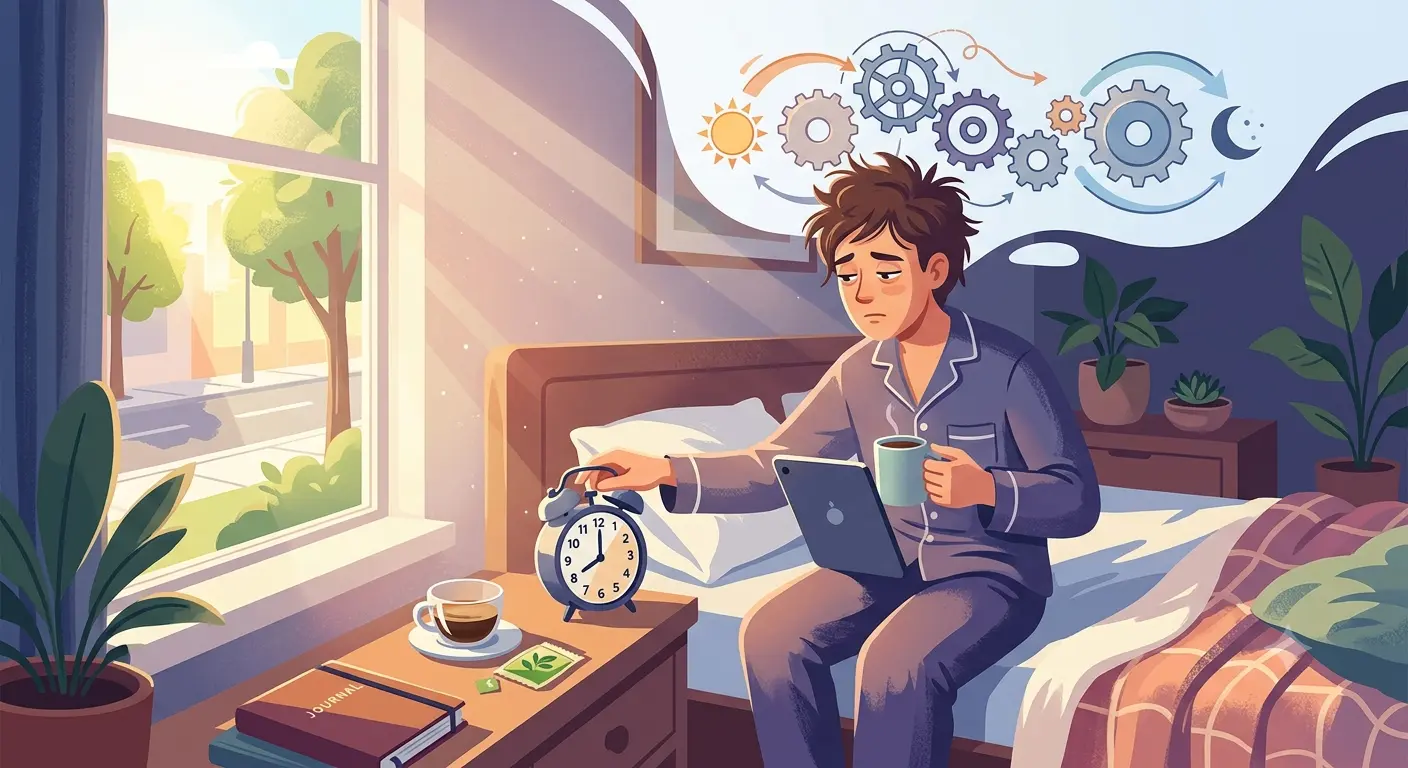
Your body runs on something called a circadian rhythm — a roughly 24-hour internal clock that’s mostly set by light exposure. This clock doesn’t just control when you feel sleepy. It also times your body temperature, your digestion, your hormone release, and when your brain naturally wants to be alert or shut down.
Here’s the problem: that clock is stubborn. It evolved over hundreds of thousands of years around sunlight, not fluorescent break rooms and 3 a.m. energy drinks. When you work a night shift, you’re not just changing your bedtime. You’re asking your entire body to override millions of years of programming, usually with nothing more than caffeine and stubbornness.
That’s why so many night shift workers describe the same experience: waves of fatigue that hit hardest between 2 and 6 a.m. (your circadian low point, whether or not you’re awake for it), then a wired, restless feeling when you finally try to sleep during daylight hours. Your body is quite literally fighting you.
This isn’t just uncomfortable — it has real health consequences. Research has linked chronic circadian misalignment to higher risks of metabolic issues, weight gain, and mood disturbances, on top of the obvious effects of poor sleep quality. So this isn’t a “just push through it” situation. It’s worth actually addressing.
Fixing It Starts With Light, Not Sleep
If there’s one thing I wish every night shift worker understood, it’s this: light is the single most powerful tool you have for resetting your internal clock. More powerful than melatonin. More powerful than blackout curtains, though you’ll need those too.
A few practical ways to use this:
- Get bright light during your shift, especially in the first half of it. Bright overhead lighting or a light therapy lamp at your workstation can help signal to your brain that this is “daytime,” even at 1 a.m.
- Wear sunglasses on your commute home if you’re driving into morning sunlight. This sounds almost silly, but exposure to bright daylight right before bed is one of the fastest ways to undo hours of good sleep hygiene, because it tells your brain the day is just starting.
- Make your bedroom aggressively dark. Blackout curtains, an eye mask, covering up little LED lights on chargers and smoke detectors — treat daytime sleep the way you’d treat nighttime sleep for anyone else.
Eating on a Backwards Clock
This is where my nutrition background usually comes in, because clients are often surprised that what and when they eat affects how well they sleep just as much as when they turn off the lights.
Your digestive system has its own rhythm, and it doesn’t automatically flip just because your work schedule did. Eating a heavy meal at 4 a.m. — right in that circadian low point — asks your body to digest at a time it’s biologically primed to be resting, which is part of why so many shift workers deal with heartburn, sluggishness, and blood sugar crashes.
A few adjustments that consistently help the people I work with:
- Treat your “lunch” like an actual lunch, not your biggest meal. If your shift runs overnight, eat your largest, heaviest meal before you start work — treating it as your dinner — and keep what you eat during the shift lighter: protein, vegetables, whole grains, something that won’t sit like a brick.
- Cut caffeine at least 6-8 hours before your intended sleep time. I know this one is unpopular. Caffeine has a longer half-life than people assume, and even if you feel like you “fall asleep fine” after an afternoon coffee, it’s very likely reducing your deep sleep without you noticing.
- Avoid a big meal right before your daytime sleep window. Give yourself at least an hour of buffer, and lean toward something light if you need a bite before bed.
Protect Your Days Off (Even Though It’s Tempting Not To)
This is the piece almost everyone resists, and I understand why. After a stretch of night shifts, the pull to “get back to normal” on your days off — staying up late with friends, waking up for a regular morning — feels like relief. But it’s often what keeps people stuck in the cycle.
Constantly flipping your schedule back and forth is like giving yourself jet lag every few days, without ever booking a flight. If you can, try to keep your sleep and wake times within two or three hours of your work-shift schedule, even on days off. It’s not always realistic with family or social obligations, and I’m not going to pretend it is. But the closer you can stay to one consistent rhythm, the less brutal the adjustment period becomes each time you go back to work.
A Few Other Things Worth Knowing
- Strategic napping helps, but timing matters. A 20–30 minute nap before a night shift can genuinely improve alertness without leaving you groggy. Longer naps closer to your shift start can sometimes backfire.
- Melatonin can help, but it’s a timing tool, not a sedative. Taken a few hours before your intended sleep time, it can help nudge your internal clock in the right direction. Taken randomly whenever you feel tired, it mostly just adds confusion.
- Hydration and alcohol matter more than people expect. Alcohol might make you drowsy initially, but it fragments sleep later in the cycle — which is especially costly when your sleep window is already compressed and hard-won.
The Honest Part
I’d love to tell you there’s a single fix that makes night shift work feel exactly like a normal schedule. There isn’t. Even with every strategy above done well, most research suggests permanent night shift workers never fully align with a daytime schedule the way people who work standard hours do. Your body will always know, on some level, that something’s off.
What these strategies actually do is reduce the damage and make the adjustment survivable — better sleep quality, steadier energy, fewer of those 3 a.m. moments where you feel like you’re fighting your own body. That’s not nothing. For a lot of the people I’ve worked with, it’s the difference between dreading every night shift and just… getting through it, functionally and without wrecking their health in the process.
If you’re deep in a stretch of night shifts right now, you don’t need to fix everything at once. Pick one thing — the light exposure, the meal timing, protecting your days off — and start there. The rest can follow once that one piece actually sticks.
FAQ Block:
How long does it take to adjust to a night shift schedule?
Most people need several days to fully adjust, and some research suggests full circadian alignment never happens completely for permanent night shift workers. Consistent light exposure and sleep timing can speed up the adjustment period.
Is it bad to eat a big meal during a night shift?
Heavy meals during the overnight hours can worsen digestion issues and energy crashes, since your digestive system follows its own daily rhythm. Lighter, protein-focused meals during the shift tend to work better.
Should I stay on my night shift schedule on days off?
Keeping your sleep and wake times within a couple of hours of your work schedule, even on days off, generally makes the transition back to work shifts easier and reduces overall sleep disruption.
You May Also Like: