

If you’ve checked your portfolio today and noticed Hindustan Aeronautics (HAL) shares lighting up green, you’re not imagining things. The stock surged sharply in Thursday’s trade, and if you’re holding it or thinking about buying you’re probably wondering what changed overnight. Here’s the full picture of HAL share price: what moved the stock, what HAL’s numbers actually look like, and what to watch before you make a call.
What Happened to HAL Share Price Today?
Hindustan Aeronautics shares opened strong and extended gains through the morning session on Thursday, August 6, 2026, climbing sharply from Wednesday’s close of around ₹4,645 on the NSE. By mid-morning, the stock was trading well above ₹4,880, putting it firmly in the upper half of its 52-week range of ₹3,479 to ₹4,978. Volumes were noticeably heavier than usual, a sign that this wasn’t just retail chatter — institutional money was moving too.
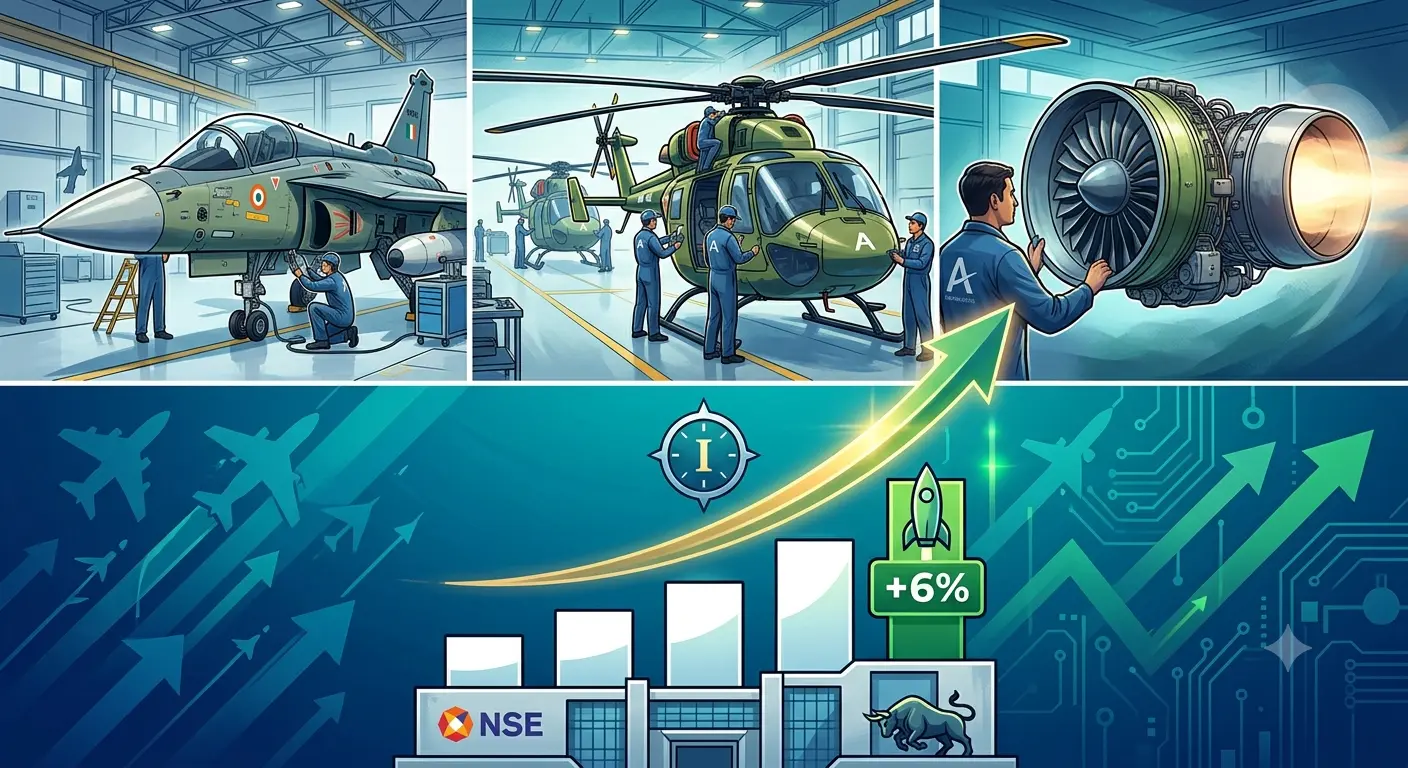
This rally didn’t come out of nowhere. It’s the combination of a fresh bullish brokerage call, some concrete progress on HAL’s biggest execution headache (engine supply), and a broader wave of optimism sweeping India’s defence stocks.
Why Is Hindustan Aeronautics Stock Rising?
1. ICICI Securities Named HAL a Top Pick
ICICI Securities reaffirmed its structurally positive view on India’s defence sector on Thursday, naming HAL and Solar Industries as its two preferred stocks in the space with a ‘Buy’ rating. The brokerage pointed to the Ministry of Defence’s target of a ₹3 lakh crore annual capital outlay by 2029, along with the new Defence Procurement Manual 2025, which is expected to compress acquisition timelines and speed up order flow to companies like HAL.
2. Engine Supply Is Finally Catching Up
For over a year, HAL’s biggest overhang has been the delayed supply of GE Aerospace’s F404-IN20 engines for the Tejas Mk1A fighter jet — a bottleneck that held up deliveries and worried the Air Force. That story is quietly improving: GE has now delivered the seventh F404 engine to HAL, and each fresh delivery reduces the risk of penalties and gets HAL closer to booking revenue on its ₹62,400 crore Tejas Mk1A order for 97 additional aircraft
3. New Outsourcing Tender and a Safran Tie-Up
HAL has also issued a fresh tender to outsource Tejas Mk1A substructure work — a move that signals the company is scaling up production capacity rather than waiting on internal bottlenecks to clear on their own. Separately, HAL and France’s Safran have an agreement in place to manufacture alloy turbine ring forgings for LEAP engines, opening a new, diversified revenue stream beyond pure defence manufacturing.
4. The Whole Defence Sector Is in Favour
HAL isn’t rallying in isolation. India’s Defence Acquisition Council cleared procurement proposals worth roughly ₹52,000 crore in the past month alone, the Navy is expected to finalise a long-pending ₹70,000 crore submarine order soon, and India’s defence exports touched $20.5 billion in FY26. Add to that rising global defence urgency linked to tensions in the Middle East, and you get a sector-wide tailwind that’s lifting HAL, Bharat Electronics, Bharat Dynamics and peers together.
HAL’s Financial Snapshot
Here’s where the company actually stands, numbers-wise, as things sit today:
| Metric | Value |
| Market capitalisation | ~₹3.10 lakh crore (as of Aug 5, 2026) |
| 52-week range | ₹3,479.10 – ₹4,978.00 |
| P/E ratio | ~34x |
| Order book (FY26 end) | ₹2,54,538 crore (7+ years of revenue) |
| FY26 net profit | ₹9,071.9 crore |
| FY26 revenue | ₹36,787.95 crore |
| Q4 FY26 net profit | ₹4,196.08 crore, up 5.5% YoY |
| Upcoming dividend | ₹10/share, record date August 14, 2026 |
What’s Coming Next for HAL Investors?
The next big catalyst is right around the corner: HAL is scheduled to report its Q1 FY27 earnings on August 7, 2026, with consensus estimates pegging EPS at around ₹22.22. Given today’s run-up, the market is clearly positioning ahead of that print — which cuts both ways. A strong beat, especially any update on Tejas Mk1A deliveries, could extend the rally. A soft number or continued delivery delays could trigger just as sharp a pullback.
Also worth marking on your calendar: HAL’s stock trades ex-dividend on August 14, 2026, for its ₹10 per share final FY26 payout. If you’re buying purely for the dividend, you’d need to hold shares before that date.
Should You Buy HAL Shares Right Now?
Here’s my honest read as someone who’s tracked defence stocks through a few of these cycles: HAL’s long-term story is genuinely strong. A record order book, a government that’s actively pushing capital outlay higher, and real progress on the engine bottleneck are not small things. But the stock has already run up significantly over the past year, and it’s trading at a premium valuation that assumes a lot of that good news plays out on schedule. Chasing a stock right after a 5-6% single-day pop, one day before an earnings report, is exactly the kind of decision that benefits from patience rather than urgency.
If you already own HAL, tomorrow’s results and management commentary on Tejas deliveries will tell you more than today’s price action ever could. If you’re looking to enter fresh, waiting for the post-earnings dust to settle isn’t a bad instinct — buying strength has its place, but so does not overpaying for a story that’s already being priced in.
Today’s rally in HAL stock isn’t a one-off spike — it’s the market reacting to real, verifiable progress: a fresh brokerage endorsement, engine deliveries finally moving, and a defence sector that’s got genuine tailwinds behind it. But real progress and a fair entry price are two different things. Keep an eye on tomorrow’s Q1 FY27 results before deciding your next move, and always size any single stock position sensibly within your broader portfolio.
This article is for informational purposes only and does not constitute investment advice. Please consult a registered financial advisor before making investment decisions.
Everything You Need to Know
Why did HAL share price jump today?
HAL shares rose sharply after ICICI Securities named the stock a top defence sector pick, GE Aerospace delivered its seventh F404 engine for the Tejas Mk1A programme, and broader optimism swept India’s defence stocks on strong order-approval momentum.
Is HAL a good stock to buy now?
HAL has strong long-term fundamentals, including a ₹2.54 lakh crore order book and improving execution on Tejas deliveries. However, the stock trades at a rich valuation after recent gains, and Q1 FY27 results due August 7, 2026 could swing the price meaningfully in either direction.
What is HAL’s Q1 FY27 earnings date?
HAL is scheduled to report Q1 FY27 results on August 7, 2026, with consensus EPS estimated at around ₹22.22.
What is HAL’s order book size?
As of the end of FY26, HAL’s consolidated order book stood at ₹2,54,538 crore, providing more than seven years of revenue visibility at current execution rates.
When is HAL’s next dividend?
HAL has announced a final dividend of ₹10 per share for FY26, with a record date of August 14, 2026. Shares will trade ex-dividend before that date.
Why were Tejas Mk1A deliveries delayed?
Deliveries were held up primarily by a shortage of GE Aerospace’s F404-IN20 engines. HAL has now received its seventh engine delivery, and government officials expect 18-24 aircraft to be delivered by the current financial year-end if production issues stay resolved.